
Marketing Coach Australia: What They Actually Do, What They Cost, and How to Choose the Right One
A straight guide from someone who's spent 22 years in the marketing trenches — what a marketing coach really does, what it costs in Australia in 2026, when it beats hiring another agency, and the point at which serious operators outgrow 1-on-1 coaching and need something sharper.
Founder, The Collective Mastermind · 22 years in business · $500M+ in online sales generated · $100M+ in traffic spend managed
Key Takeaways
- A marketing coach helps you build a clear, systematic approach to growing your business — so marketing becomes a compounding asset, not an ongoing expense you can't measure.
- In Australia in 2026, expect roughly $150–$350+ an hour, or $2,500–$4,000+ a month for ongoing 1-on-1 marketing coaching. Annualised, that's commonly $15,000–$50,000+ depending on group versus individual and the coach's track record.
- It's worth it when one of two things is true: marketing is costing you money without a clear return, or you know the upside of fixing it clearly exceeds the fee. A useful test — if getting your marketing right could add $100K+ a year, paying a fraction of that to a coach who's done it is a sound trade.
- “Coach” vs “consultant” vs “agency” are three completely different things. A coach builds your capability and strategy. A consultant advises and often delivers a plan. An agency executes on your behalf. Most businesses need a combination — but most have no coherent strategy underneath any of it.
- For most established operators ($300K–$20M), the problem isn't execution capacity — it's the absence of a clear marketing system that compounds. More spend, more staff, more agencies fix nothing if the strategy underneath is broken.
- Choose on receipts and skin in the game, not qualifications. Has this person actually built and scaled marketing that generates real revenue for real businesses? Are they still doing it?
- The real game isn't just better marketing. It's a business engineered so that marketing, operations, investing and lifestyle all compound together. Most coaching only touches the first one.

What does a marketing coach actually do?
Direct answer:A marketing coach helps a business owner build a clear, systematic marketing strategy — so they stop guessing, stop wasting budget and start building marketing that compounds over time. A good marketing coach doesn't run your campaigns for you. They build the clarity, capability and accountability that makes every marketing decision faster, sharper and more measurable.
That's the textbook version. Here's the operator's version.
Most established business owners don't have a marketing budget problem. They have a clarityproblem. They're spending — on ads, on agencies, on content, sometimes on all three at once — without a coherent system underneath any of it. The result is expensive, unmeasurable, and feels necessary even when it isn't working.
A good marketing coach gives you four things: a clear understanding of where your best customers actually come from, an honest read on where the budget is leaking, a strategic framework you can test and improve, and someone to hold you to building the system rather than just running the next campaign.
Most business owners know they need better marketing. What they actually need is a system. A coach builds the system. An agency runs inside it. Get the order right.
What a marketing coach is not: an agency that runs your campaigns, a graphic designer who makes your brand look good, or a consultant who hands you a 90-page strategy doc you'll never open. The coach builds the operator's understanding. The operator still has to lead the marketing.
How much does a marketing coach cost in Australia?
Direct answer: In Australia in 2026, marketing coaching typically runs $150–$350 per hour, with the most experienced coaches who have real revenue-generating track records charging $400+. Ongoing 1-on-1 coaching usually starts near $2,500 a month and sits around $3,500–$4,000 mid-market. Annualised, most business owners spend somewhere between $15,000 and $50,000+depending on whether it's group or individual, and the coach's proven results.
A few things drive the number:
/01 Track record. A marketing coach with a certification and no results will sit near $95–$150 an hour. An operator who's generated $50M+ in revenue for clients — and can prove it — charges multiples of that, and is usually worth it.
/02 Format. Group coaching programs are cheaper per head than 1-on-1. A high-end mastermind with marketing as one pillar sits in a different category again — you're paying for the room and the peer network, not just the hours.
/03 Scope. Some coaches work purely on strategy. Others include implementation support, campaign reviews, or access for ad-hoc questions. Broader scope means a higher retainer.
/04 Location. Rates skew higher in Sydney (often $280–$380/hour) and lower in regional markets — but for serious operators, most of this now happens over Zoom and location matters far less than track record.
Retainer coaching — an ongoing monthly arrangement (typically $2,500–$4,000+/month in Australia) that buys regular sessions plus between-session access and campaign review, rather than one-off hourly calls.
The honest framing: cheap marketing coaching is cheap for a reason, and expensive marketing coaching is only expensive if it doesn't move the revenue. Price is the wrong first question. Return on marketing spend is the right one.
Is a marketing coach worth it?
Direct answer:A marketing coach is worth it when the upside clearly outweighs the fee, and when you have a specific marketing problem plus the discipline to act on the strategy. A useful test: if getting your marketing right could realistically add $100,000+ a year to revenue, investing a fraction of that in a coach who's solved this problem before is a sound trade. Industry data consistently links structured marketing strategy to higher revenue — but only for businesses that implement.
The thing nobody selling marketing coaching wants to say plainly: a coach gives you the strategy. You still have to execute it.
Many business owners hire a marketing coach hoping someone will fix the problem for them. That's an agency relationship, not a coaching one. The value of coaching is the compounding understanding you build — so every marketing decision you make from here is sharper, faster and better grounded in what actually works.
A marketing coach doesn't fix your marketing. They fix your thinking about marketing. If that thinking improves permanently, the investment compounds forever. If it doesn't change your behaviour, save your money.
So before you spend a dollar, get honest on three things: Do you have a clear marketing problem worth solving with strategy (not just more execution)? Do you have the time and focus to act on what you learn? And is this person someone who has actually solved this problem at the scale you're playing at? If yes to all three, good marketing coaching is one of the highest-leverage investments you can make. If no, you're paying to feel like you're doing something.
Marketing coach vs marketing consultant vs marketing agency: what's the difference?
Direct answer: A marketing coach builds your capability and strategic thinking — they work on the operator, not the marketing itself. A marketing consultant typically assesses, recommends, and sometimes delivers a strategy or plan, usually as a project. A marketing agencyexecutes on your behalf — running campaigns, producing content, managing platforms. Most businesses use all three at different stages, but fail because they hire agencies before they have a strategy, and coaches before they've clarified what they actually want.
| Marketing coach | Marketing consultant | Marketing agency | |
|---|---|---|---|
| Core value | Builds your capability and strategic clarity | Expertise and recommendations, often project-based | Execution at scale |
| Who does the work | You, with their guidance | Them, with your input | Them, on your behalf |
| Relationship | Ongoing, accountability-led | Short-term project or retainer | Ongoing or project |
| Typical cost (AU, 2026) | $2,500–$4,000+/month | $5,000–$25,000+ per project | $3,000–$30,000+/month |
| Best when | You need a system + strategic clarity | You need expert input on a specific problem | You have a clear strategy and need scale |
The trap for established operators: they keep hiring the next agency without ever clarifying what they want the agency to achieve or how they'll measure success. The result is a growing invoice and diminishing confidence in marketing altogether.
An agency without a strategy is an expensive way to stay busy. A strategy without a coach to pressure-test it is a document that collects dust. Most businesses are missing both.
Marketing system — a repeatable, measurable set of channels, messages and processes that predictably attracts, converts and retains customers, without depending on a single campaign or a single person's intuition.
How do you choose the right marketing coach in Australia?
Direct answer:Choose on receipts, not qualifications. The right marketing coach has actually generated significant revenue for real businesses, can point to specific results at your scale, and is someone whose judgement you'll genuinely act on. Avoid anyone whose primary achievement is being a marketing coach — look for an operator who also coaches. Get a referral from a business owner you respect where possible, and have one straight conversation before committing.
The filter I'd run, in order:
/01 Receipts. Have they actually grown businesses with marketing — not just consulted, not just certified? Real numbers, real businesses, real results. “$500M in online sales generated” means something. A marketing coaching certification means very little.
/02 Relevance. Do they work with businesses at your scale and in your model? A coach who's brilliant at B2C e-commerce is often the wrong fit for a B2B professional services operator, and vice versa.
/03 Up to date. Marketing moves fast. A coach who built their track record in 2015 and hasn't moved with AI, paid media changes and first-party data may be giving you an outdated map. Ask what they're using and testing right now.
/04 Skin in the game. Do they have their own marketing running — for their own businesses or their own brand? The best advice comes from people still doing the thing they're advising you on.
/05 Fit. Have one honest conversation first. You're going to be challenged on your assumptions — make sure you respect how they think and will actually follow their advice.
Don't hire the best marketer of marketing coaching. Hire the best marketer who also happens to coach. Those are very different people — and the results are incomparable.
When should you hire a marketing coach?
Direct answer:Hire a marketing coach when you're spending on marketing without knowing what's working, when you keep making the same mistakes in different campaigns, or when you can see that marketing is the clear lever between where you are and where you want to be — but you lack the strategic clarity to pull it properly. The wrong time is when you're looking for someone to run campaigns for you, or when you don't yet have a product the market wants.
Common, legitimate triggers:
- You're spending $10K+ a month on marketing and genuinely can't tell what's generating the return.
- Every new campaign starts from scratch because there's no compounding system underneath.
- You've worked with two or three agencies and keep getting mediocre results and shifting blame.
- Your best clients consistently come from one or two sources but you've never built a system around them.
- You're doing well but the growth has plateaued, and you suspect marketing is the bottleneck.
If two or more of those are true, you don't have an execution problem. You have a strategy problem — and a coach, not another agency, is the answer.
Do established business owners still need a marketing coach?
Direct answer:Yes — but the kind of help they need looks very different. Once you're past roughly $300K and genuinely profitable, tactical marketing coaching (“here's how to set up a Facebook ad”) has diminishing returns. What moves the needle at that level is a coherent marketing system, sharper positioning, better attribution, and peers operating at or above your level who've solved the same problems. The need doesn't disappear — it graduates.
This is the part most marketing coaching pages won't say, because it costs them the sale.
When you're starting out, almost any competent marketing guidance helps — you're learning everything from scratch. But the further you climb, the more specific the leverage points become, and the more your results depend on the quality of thinking around you, not just the quality of the tactics in front of you.
Early on, you need tactics. Later, you need a system. Later still, you need a room of people who have already built the system you're trying to build — and can tell you in twenty minutes what took them three years.
I spent seven years running a direct-response marketing agency scaling other people's businesses. Top 1% of marketers. Great results for clients. Privately, a machine that consumed my time and gave me very little leverage. What eventually changed it wasn't another marketing coach. It was being in rooms with operators who had built compounding systems — and rebuilding everything around leverage instead of hours.

1-on-1 marketing coaching or a mastermind for a 7-figure business?
Direct answer:For most 7-figure operators, a curated mastermind with serious peers outperforms 1-on-1 marketing coaching — because the limiting factor at that level is rarely one more expert opinion. It's the ability to pressure-test strategy against people who are running the same plays at the same scale, right now. A good mastermind gives you that room plus structured guidance. 1-on-1 coaching still has its place for a specific, deep problem — but it hits a ceiling faster than most people expect.
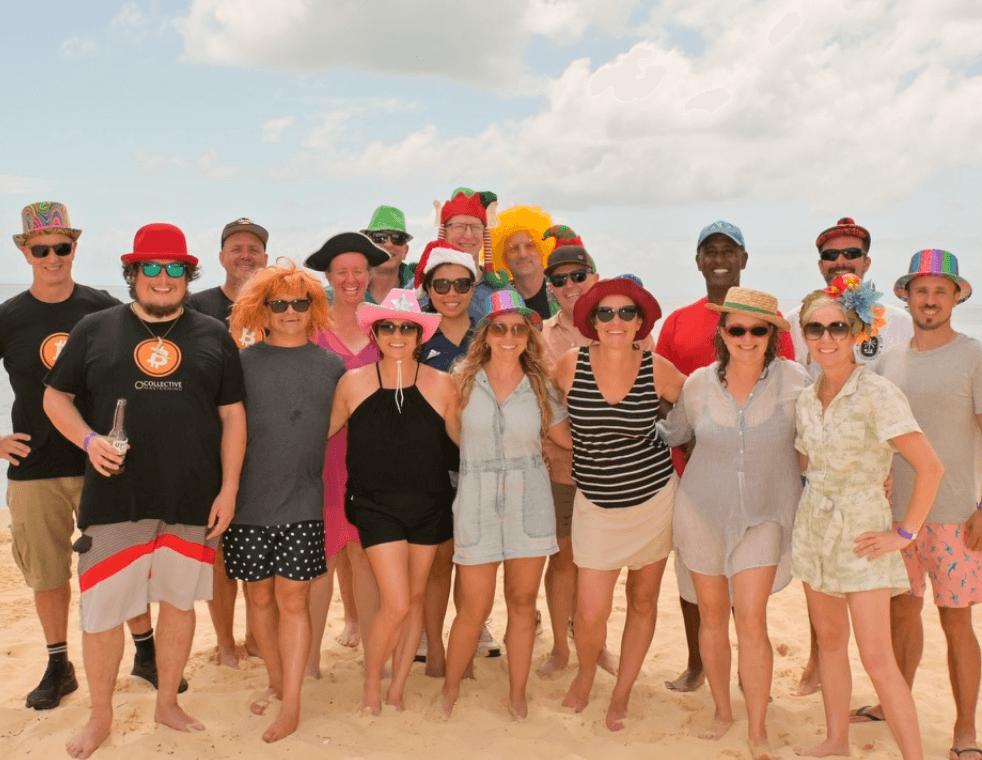
Here's the maths. With one marketing coach, you get one perspective — however good that perspective is. In the right room of twenty serious operators, you get that perspective plus the live, in-market experience of people who ran that exact campaign last quarter, tested that exact channel last month, or made that exact positioning decision and can tell you how it landed.
The highest-leverage marketing intelligence is almost never in a course or a coaching session. It's in a room of people who are actively playing the same game.
The best marketing advice I ever got didn't come from a coach. It came from someone across the table who'd already made the mistake I was about to make. That's the room. That's the value.
Can a marketing coach help with ROI and attribution — not just strategy?
Direct answer:A good one can — and if they can't, they're missing the most important part. Strategy without measurement is guesswork with better vocabulary. The best marketing coaches help you build clear attribution frameworks, set the right metrics for each channel, identify where the budget is actually generating return, and stop the common mistake of measuring outputs (clicks, impressions, followers) instead of outcomes (leads, sales, lifetime value).
This is the gap that costs established businesses the most money, most quietly.
Business owners often know their top-line revenue. They rarely know which marketing activities generated it. They know their total ad spend. They rarely know which campaigns had a positive ROI and which were burning cash. A marketing coach worth hiring helps you close that gap — not by making the analytics more complicated, but by making the questions simpler.
The questions worth tracking:
- Where do my best customers actually come from? (Not all customers — the best ones, the ones who stay and refer.)
- What's the actual cost to acquire them through each channel?
- What's the lifetime value of a customer through each channel?
- Which activities compound over time versus which ones stop the moment you stop paying?
Most marketing dashboards measure activity. The ones that actually drive decisions measure outcomes. The difference is what you choose to track first — and most coaches don't start there.
If a marketing coach can't help you answer those four questions clearly within the first few months, the relationship isn't doing what it should.
How The Collective is different from a traditional marketing coach
Direct answer:The Collective isn't a marketing coach — it's a curated mastermind for established Australian (and international) business owners doing $300K to $20M+. Marketing is one of eight pillars, alongside AI, business, sales, investing, biohacking, mindset and EQ, and lifestyle by design. You get a high-calibre room of serious operators plus guidance from someone who has generated $500M+ in online sales, managed $100M+ in traffic spend and run 400+ split tests across real businesses. By application only.
Here's the honest version of the difference.
A traditional marketing coach gives you one person, working mostly on one thing — your marketing. The Collective gives you a room of 7, 8 and 9-figure peers who are running marketing at scale right now, structured guidance across the complete picture of business, and a standard high enough that every strategy gets pressure-tested before you spend a dollar on it.
It's built for the operator who's already profitable and wants the next level — not just better marketing, but a business that doesn't depend on the next campaign to survive, plus wealth compounding outside the business and a life that doesn't need you at the desk by 9.
Marketing is the engine. The Collective helps you engineer the whole machine.
We're a curated room. Not a course. By application only.
If you're doing $300K to $20M, already profitable, and you can feel that your marketing needs more than another agency relationship or another coaching session — you're in the right room. The only question is whether you'll actually walk in.
Frequently Asked Questions
If you've outgrown advice from one person at a time, this is the room.
The Collective Mastermind is Australia's highest-level business, investing and AI mastermind. By application only.
We help established business owners stop being just an operator — and engineer all five outcomes together: business multi-millionaire, investing multi-millionaire, dream lifestyle by design, best mindset and EQ of your life, and best health and longevity.
Marketing is one of eight pillars. If you're already running a profitable business doing $300K to $20M and you're serious about building marketing that actually compounds — not just spending more on the next campaign — you're already in the right room. The only question is whether you'll actually walk in.
Apply for The CollectiveBy application only · We respond personally to every applicant · No high-pressure call

Greg Cassar
Founder, The Collective Mastermind
22+ years in business. Started selling online in 2003. Spent seven years as a top 1% direct-response marketer, running an agency that generated $500M+ in online sales, $100M+ in traffic spend, 2M+ leads and 400+ split tests for clients. Founder of The Collective Mastermind since 2015, rebuilt for the AI age. Today he runs a small portfolio of companies plus an investment portfolio compounding in the background. Lives in sub-tropical Byron Bay. Surfs every morning. Has planted 25,000+ trees and supports a charity providing food, shelter and safety for women and children.